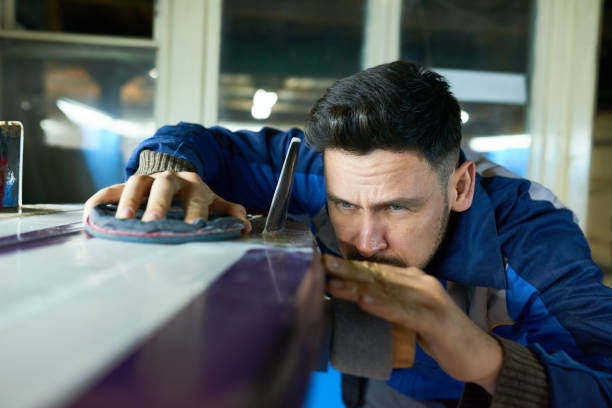
From hairline cracks to structural gouges, fiberglass damage is an inevitable part of boat ownership. Learning to repair it is about more than just looks—it’s essential for maintaining your vessel’s safety, performance, and lifespan.
Common fiberglass boat repair projects fall into a few key categories:
-
- Gelcoat Crazing & Cracks: Surface-level cracks in the colored, protective outer layer.
-
- Delamination: A separation between the fiberglass layers, often felt as a “spongy” or soft area, which compromises strength.
-
- Punctures & Holes: Impact damage that breaches the hull or deck, requiring structural rebuilding.
Ignoring water intrusion isn’t an option; it can lead to core rot and costly structural damage. This guide covers everything from assessment to finishing.
For complex structural issues or repairs below the waterline, professional expertise is vital. The team at Ignition Marine ensures repairs meet original strength specifications, maintaining your vessel’s seaworthiness and your peace of mind.
What Fiberglass Boat Repair Involves
Understanding fiberglass boat repair is essential to maintain both your boat’s appearance and its critical structural integrity. Damage falls into two distinct categories, each requiring specific materials and methods.
 Surface Repair: Gelcoat
This fixes damage confined to the outer, colored gelcoat layer to preserve aesthetics and waterproofing.
When Needed:
-
-
-
-
-
-
-
-
-
-
-
-
-
-
-
-
-
-
-
- Surface scratches, chips, and scuffs
- Spider cracks (crazing)
- Small, dried gelcoat blisters
-
-
-
-
-
-
-
-
-
-
-
-
-
-
-
-
-
-
Process: Clean and taper the area, fill with color-matched gelcoat paste, then sand and polish to a seamless, glossy finish.
Deep Repair: Structural Laminate
This restores strength when damage penetrates into the fiberglass reinforcement layers (the laminate).
When Needed:
-
-
-
-
-
-
-
-
-
-
-
-
-
-
-
-
-
-
-
- Holes, punctures, or deep cracks exposing fiberglass cloth
- Impact damage causing flex or a spongy feel (delamination)
- Severe blistering or damage to structural parts (transom, stringers)
-
-
-
-
-
-
-
-
-
-
-
-
-
-
-
-
-
-
Process: Grind out damaged material, then rebuild the laminate layer-by-layer using fiberglass cloth or mat saturated with epoxy or polyester resin. The area is then faired, sealed, and finished.
Why Fiberglass Boat Repair Matters
Ignoring minor hull damage is a risk to safety, performance, and cost. Timely repair is essential, not optional.
1. Safety: Preventing Structural Failure 
A compromised laminate weakens your boat’s backbone. Unsealed damage lets water in, causing hidden delamination or core rot that silently destroys strength from the inside out.
2. Performance: Preserving Handling & Efficiency
Damage disrupts smooth water flow, creating drag, reducing fuel economy, and causing poor handling. A soft or flexing hull loses its designed responsiveness.
3. Cost Savings: Stopping Small Issues Early
A simple $200 gelcoat repair prevents water intrusion that could lead to a $2,000+ structural rebuild later. Addressing damage immediately stops costs from multiplying.
4. Longevity: Protecting Value and Lifespan
Consistent, prompt repairs seal the hull, maintain rigidity, and prevent decay. This is the key to decades of service and protects your boat’s resale value.
In short, fiberglass boat repair is an investment in the vessel’s future. It’s the proactive measure that stops a small problem from becoming a major, dangerous, and expensive ordeal, ensuring your boat remains safe, efficient, and valuable for the long haul.
Types of Fiberglass Boat Damage
Knowing how to identify damage is the first step in understanding how to fix a fiberglass boat. This guide breaks down common types of damage, from simple scratches to critical structural failures, to help you plan your approach to fiberglass boat repair.

Cosmetic & Minor Damage
These issues affect only the gelcoat surface. They are primarily aesthetic but should be sealed to prevent water intrusion.
Surface & Spider Cracks
Surface and spider cracks, known as “crazing,” are fine, shallow lines confined to the gelcoat layer. Caused by stress, impact, or manufacturing issues, these are cosmetic flaws. Repair involves filling and sealing them to restore a smooth, waterproof surface and prevent further propagation.
Gouges & Scratches
Gouges and scratches are physical abrasions that damage the gelcoat without reaching the structural fiberglass beneath. Typically from contact with docks or debris, they are cosmetic. Deeper gouges require filling and fairing to preserve the hull’s contour and waterproofing, but they are not structural if the laminate underneath remains solid.
Structural & Serious Damage

These issues affect the fiberglass laminate itself. Compromised structure affects safety and must be addressed correctly. This is critical work for any fiberglass boat hull repair.
Blisters and Delamination
Blisters and Delamination describe water-induced failures within the hull’s layers. Blisters are fluid-filled pockets between gelcoat and fiberglass, while delamination is a deeper separation inside the laminate, causing a hollow, spongy feel.
Both require the same structural fix: grinding out all compromised material, drying thoroughly, and rebuilding the laminate.
Holes & Punctures
Holes & Punctures full-thickness breaches from impact or grounding. Repairing them is critical structural work that demands professional skill to accurately rebuild the missing laminate, restore the hull’s shape, and guarantee a watertight seal as strong as the original.
Soft Decks or Floors
Soft Decks or Floors indicate a failed core. This sponginess means water has rotted the structural core material (like balsa or foam) beneath the fiberglass skin. The repair is complex, involving removing the top skin, replacing all the rotten core, and expertly re-laminating the area.
When Should You Repair Fiberglass Damage?
Knowing when to address damage is just as important as knowing how. For fiberglass boat repair, timing directly affects cost, complexity, and safety. Here’s a clear guide on when to take action.

-
Immediately After Impact or Visible Damage
This is non-negotiable for structural damage. A puncture, crack, or gouge that exposes the fiberglass laminate creates an open pathway for water. Water intrusion quickly leads to delamination, rot in core materials (like balsa or foam), and vastly more expensive repairs.
-
Before the Boating Season Begins
The pre-season haul-out or on-trailer inspection is the ideal, proactive time to address all discovered issues. This includes both structural flaws and cosmetic gelcoat cracks.
-
After Hauling Out or During a Hull Inspection
When the boat is out of the water, it’s the perfect opportunity to find and fix what you can’t see while afloat. This is when you discover blisters (osmosis), stress cracks along hard-to-see areas, or damage from docking incidents.
-
Prior to Selling or a Pre-Purchase Survey
Repairing fiberglass damage before listing your boat or undergoing a survey is a strategic investment.
Step-by-Step Guide to Repairing a Fiberglass Boat
The right repair process for your fiberglass boat depends on the damage severity. This five-step guide shows you how do you repair a fiberglass boat to achieve a strong, seamless result.

Step 1: Inspect and Assess the Damage
Tap the area—a solid sound indicates good laminate, a dull thud suggests delamination or moisture. Check for water intrusion with a paper towel; any wetness must dry completely. Identify if damage is only in the colored gelcoat (cosmetic) or exposes the woven fiberglass cloth (structural).
This tells you if it’s DIY-friendly or needs a pro.
Step 2: Prepare the Repair Area
Thorough prep is the foundation. This first practical stage of how to fiberglass repair a boat involves cleaning the area with acetone, ensuring it’s dry, and using a grinder to remove damaged material back to solid laminate.
Crucially, bevel the edges at a wide angle (about 12:1) to create a bonding “bowl,” then sand the surrounding surface for optimal texture.
Step 3: Apply Fiberglass Repair Materials
Here you rebuild the structure, the core of how to fiberglass a hole in a boat. For a hole, cut progressively larger fiberglass cloth patches. Precisely mix your resin (epoxy is recommended) and hardener. Apply resin to the area, place the smallest patch in the deepest part, saturate it, and roll out air bubbles.
Repeat with larger patches, building laminate just below the original surface, then let it cure completely.
Step 4: Sand and Smooth the Repair
Once cured, you must now fix fiberglass boat hull contours. Sand the laminate flush with the hull using a long block. Apply marine fairing compound to fill pinholes, then sand with progressively finer grits until perfectly smooth, with edges feathered invisibly into the original hull.
Step 5: Finish and Seal the Repair
Restore appearance and protection. For a color-matched finish, apply waxed gelcoat paste slightly above the surface, then wet-sand and polish to a gloss. For paint (covering how to paint a fiberglass boat hull), apply marine primer, then thin coats of marine-grade polyurethane.
Below the waterline, use dedicated antifouling paint (answering what paint to use on fiberglass boat). Let the finish cure fully before launching.
These principles also apply to how to repair floor in fiberglass boat or how to fiberglass a boat floor, involving assessing a soft deck, removing damaged core, and rebuilding the laminate sandwich.

How to Repair Fiberglass Boat Hull from the Outside
Repairing your fiberglass boat hull from the outside is the most direct method for isolated, accessible damage like gouges or small holes, eliminating the need to disturb the interior.
The process follows a clear sequence: First, assess and prepare the area by trimming away all fractured material to create a clean, tapered cavity. Next, rebuild the missing structure by laminating new layers of fiberglass cloth and resin directly onto the exterior. Finally, fair and finish the repair to seamlessly match the surrounding gelcoat. Success depends entirely on meticulous preparation and precise lamination to create a bond as strong as the original hull.
Repairing Fiberglass Boat Floors and Decks
Repairing a fiberglass boat floor or deck is a critical structural project. Unlike simple hull repairs, it involves a “sandwich” composite: a core material (plywood, balsa, foam) laminated between top and bottom fiberglass skins. Damage appears as soft, spongy, or flexing areas, signaling a wet, rotted core.
The process for how to repair floor in fiberglass boat involves three phases:
-
- Assessment and Removal: The soft top skin is cut out to expose the damaged core. All rotted material is removed, and the bottom skin is cleaned and dried.
- Core Replacement and Bonding: A new, sealed marine-grade core is fitted into the cavity and bonded to the bottom skin and the edges of the existing top skin.
- Lamination and Finishing: New fiberglass cloth is laminated over the core and feathered onto the surrounding deck—the key step for how to fiberglass a boat floor. The area is then faired, sanded, and finished with gelcoat or non-skid paint.
This provides localized reinforcement, restoring stiffness and strength. Success requires a perfectly dry bond and proper lamination to spread load. For extensive damage, professional consultation is advised.

Cleaning Fiberglass After Repair
Proper cleaning after a repair protects your work and blends it with the hull. Start by washing the area with a gentle marine soap and soft brush. For tougher stains or residues, use a dedicated fiberglass cleaner. Avoid harsh solvents or abrasive pads that can damage the new surface.
For specific issues:
-
- Stain Removal: Use targeted cleaners—oxalic acid for rust, a degreaser for oil, or a baking soda paste for organic marks. Always test first.
- Barnacle Removal: Soak the area, then carefully pry barnacles off with a plastic scraper. Never use metal tools, which gouge the gelcoat. Treat remaining residue with a lime remover.
- Oxidation: Address chalkiness with a three-step process: compound to cut the dead layer, polish to restore shine, and wax to seal and protect.
Always progress from the mildest to the strongest cleaning method to safeguard both your repair and the original hull.
Common Fiberglass Repair Mistakes to Avoid
A lasting repair requires avoiding critical errors as much as following proper technique. Common oversights during prep or execution can create a weak, unsafe result. Understanding these pitfalls ensures you work with the necessary caution for a structurally sound outcome.

Skipping Proper Surface Prep
The most frequent mistake is inadequate preparation. Repairing over wax, dirt, or gloss guarantees bond failure. Always clean with acetone, grind to solid laminate, and sand to create a rough surface for the resin to grip. The repair is only as strong as its bond.
Using Incorrect Materials
Using non-marine or mismatched materials—like hardware-store polyester on an epoxy hull—leads to poor adhesion and inadequate strength. For structural repairs, always use marine-grade epoxy resin and the correct type of fiberglass cloth.
Rushing Cure Times
Applying new layers or finishing before the previous layer has fully cured traps solvents and causes delamination. This creates a permanent weak spot. Always respect the manufacturer’s full cure times, which are temperature-dependent.
Ignoring Hidden Damage
Fixing only visible surface damage is a critical error. A crack often signals underlying stress or delamination. Always tap around the damage; a dull, spongy feel means hidden problems must be addressed first. Covering a crack over a damaged core is a temporary fix that will quickly fail.
DIY vs Professional Fiberglass Boat Repair
The decision between DIY and professional fiberglass boat repair hinges on accurately assessing the damage’s complexity. Repairs suitable for DIY are typically minor and cosmetic, such as fixing small gelcoat scratches, chips, or re-bedding hardware, where the structural laminate remains intact.
However, situations involving structural damage to core components like the transom or stringers, large-scale hull breaches, wet delamination, or the need for diagnostic investigation unequivocally require the expertise of a professional service like Ignition Marine.
Attempting complex repairs without proper skill carries severe risks, including catastrophic structural failure, hidden water intrusion that causes progressive rot, and voided warranties or insurance coverage.
Ultimately, the smartest approach is a partnership: handle simple maintenance yourself, but proactively enlist certified professionals for any repair that affects the fundamental strength and safety of your vessel.
Tools and Materials Needed for Fiberglass Boat Repair

Using the correct supplies is a critical requirement for achieving a hull-strong bond and ensuring your safety. Use this simple checklist to ensure you have all the essentials, from structural reinforcement to final finishing, before starting any project.
Project Checklist:
-
- Fiberglass Cloth or Mat: Woven cloth (e.g., 6 oz.) for strength; chopped strand mat for contouring.
-
- Resin and Hardener: Epoxy or polyester resin with its designated catalyst/hardener.
-
- Sandpaper: Assorted grits (40, 80, 120, 220, 400, 600+).
-
- Adhesive/Thickener: Filler powders (colloidal silica, microballoons) for thickening resin into adhesive putty.
-
- Gelcoat: Color-matched, waxed gelcoat paste for final cosmetic sealing.
-
- Respirator: NIOSH-approved organic vapor cartridge mask.
-
- Gloves: Disposable nitrile or durable rubber gloves.
Fiberglass Cloth or Mat
This is the reinforcement that provides strength. Fiberglass cloth (a woven fabric) offers high tensile strength and is ideal for most structural repairs.
Fiberglass mat (a non-woven, fluffy material) is easier to contour for complex curves and is often used for building up thickness quickly, typically with polyester resin. For most hull repairs, 6 oz. or 10 oz. woven fiberglass cloth is the standard choice.
Resin and Hardener
This is the adhesive matrix that saturates the cloth and bonds it all together. Epoxy resin is highly recommended for repairs due to its superior adhesion to old fiberglass, minimal odor, and greater strength.
Polyester resin is less expensive and compatible with original boat construction but has a stronger smell and weaker bond on repaired surfaces.
You will need the corresponding hardener (catalyst) for your chosen resin type, and must mix them in the exact ratio specified by the manufacturer.
 Sandpaper and Sanding Tools
Proper surface preparation is impossible without these. You will need a range of sandpaper grits: coarse (40-80 grit) for grinding and beveling, medium (120-220 grit) for shaping cured laminate, and fine (320-600+ grit) for fairing and final finishing.
Essential tools include a random orbital sander for efficiency, sanding blocks (both rigid and flexible) to maintain contours, and grinding discs for initial damage removal.
Protective Gear
This category is non-optional and must include a NIOSH-approved organic vapor respirator to protect against resin fumes and sanding dust, nitrile or rubber gloves to prevent skin contact with resins and hardeners, safety goggles for eye protection, and coveralls or old clothing dedicated to the messy work.
Gelcoat or Finishing Materials
These materials seal the repair and restore the factory appearance. For a color-matched finish, you will need waxed gelcoat paste (the wax allows it to cure in air), gelcoat thinner, and mixing cups.
For a painted finish, you will need marine-grade primer, topside polyurethane paint (for above the waterline), or antifouling paint (for below the waterline), along with appropriate brushes, rollers, and masking tape.
Tips to Prevent Future Fiberglass Damage
Preventing damage is far easier than repairing it. Consistent fiberglass boat maintenance habits are your best defense against stress cracks, UV degradation, costly impacts, and destructive moisture intrusion. By integrating a few simple routines, you can dramatically extend the life and appearance of your hull.

Regular Hull Inspections
Make a habit of visually scanning your hull and deck every time you use the boat and during washes. Look for the earliest signs of stress cracks near hardware, crazing in the gelcoat, and any breaches in seals or fittings where water could enter.
This vigilance allows you to address minor issues before they become major problems.
Avoiding Impacts and Improper Docking
Always approach docks and lifts slowly and at a proper angle, using fenders strategically. Be mindful of submerged objects and never force the boat onto a trailer or lift. Gentle handling prevents the hidden flexing that leads to future stress cracks and delamination.
Proper Cleaning and Maintenance
Apply a quality marine wax or polymer sealant at least twice a season to create a barrier against UV rays, which break down resin and fade colors, and to make it harder for contaminants to bond to the surface.
Scheduling Professional Inspections When Needed
An annual or bi-annual check by a marine technician can uncover hidden issues like developing osmotic blisters below the waterline or slight misalignments causing stress.
This proactive partnership ensures your fiberglass boat maintenance is comprehensive, preserving your vessel’s value and seaworthiness for the long term.
Master Your Fiberglass Repair with Confidence
A successful repair follows a clear process: inspect, prepare, laminate, fair, and finish. Above all, prioritize safety and precision to match the original hull’s strength. DIY is fine for small cosmetic fixes, but structural damage requires a professional. Mistakes can lead to costly, hidden failures.
Need a guaranteed repair? Trust Ignition Marine for expert fiberglass work that restores safety and value. Contact us today for a professional assessment.