

 A vessel’s propulsion system is responsible for turning engine power into movement through the water. In a conventional inboard setup, power travels from the engine through the transmission and along the propeller shaft before reaching the propeller. The propeller then converts that rotational energy into thrust that moves the vessel forward or backward.
The propeller shaft and propeller therefore work as connected parts of the same propulsion system. If either component becomes damaged, worn, misaligned, or improperly balanced, the effects can extend beyond the individual part. Speed, fuel efficiency, acceleration, vibration, handling, and overall propulsion performance can all be affected.
Professional inspection and maintenance can help identify problems before they place additional stress on other components. Depending on the vessel and condition, marine shaft and propeller services may involve inspection, alignment checks, runout measurements, balancing, repair, or replacement.
What Are a Marine Shaft and Propeller?
The propeller shaft and propeller are two of the most important components in a conventional mechanical marine propulsion system. Although they perform different jobs, both must operate correctly for the vessel to use engine power effectively.
What Does the Propeller Shaft Do?
The propeller shaft transfers rotational power from the engine and transmission to the propeller. As the engine produces power, the transmission controls how that power is delivered to the shaft. The rotating shaft then turns the propeller.
A shafting system can include several supporting components. Depending on the vessel’s design, these may include bearings that support the rotating shaft, couplings that connect drivetrain components, shaft seals that help prevent water intrusion, and a stern tube that houses or supports part of the shaft arrangement.
Because the shaft rotates continuously while the vessel is under power, its straightness, alignment, support, and condition are important to smooth operation.
What Does the Marine Propeller Do?
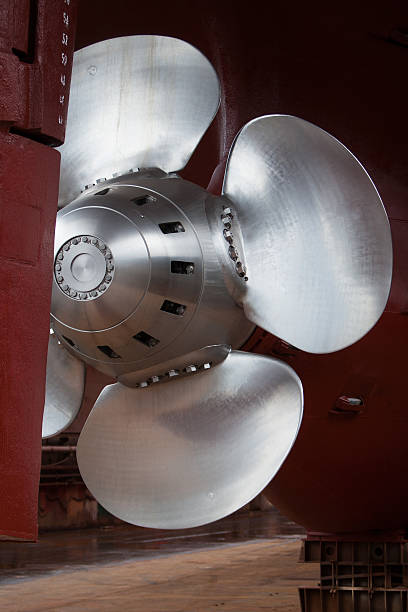
The marine propeller converts rotational energy into thrust. Its blades move through the water as the propeller turns, creating a pressure difference that produces forward or reverse thrust.
Propeller design has a direct relationship with vessel performance. Factors such as diameter, pitch, number of blades, blade condition, and overall design influence how effectively the propeller works with the engine and drivetrain.
A propeller that is bent, damaged, incorrectly sized, or out of balance may not operate as intended. Even when the engine itself is functioning properly, a problem at the propeller can prevent the vessel from achieving normal performance.
How Do the Shaft and Propeller Work Together?
Each component has a specific role, but the system has to work as a whole. The engine must produce the appropriate power, the transmission must deliver it correctly, the shaft must rotate smoothly, and the propeller must convert that rotation into efficient thrust.
A problem in one part can therefore affect the components around it. This is why marine shaft and propeller services often need to consider the wider drivetrain instead of looking at the propeller or shaft in isolation.
How Shaft and Propeller Condition Affects Vessel Performance
The condition of the shaft and propeller can influence several aspects of vessel operation.
- Vessel speed: A damaged or improperly functioning propeller may not generate the expected thrust, making it harder for a vessel to reach its normal speed.
- Fuel efficiency: If propulsion components are not operating efficiently, the engine may need to work harder to produce the desired vessel performance.
- Acceleration: A propeller with damaged or deformed blades may reduce the vessel’s ability to accelerate smoothly.
- Vibration and noise: Imbalance, shaft problems, misalignment, or damaged components can introduce abnormal vibration and noise.
- Engine loading: Propeller condition and specifications affect the load placed on the engine. A propulsion problem can therefore be reflected in engine operating behaviour.
- Handling: Uneven or inconsistent thrust can affect how a vessel responds to throttle and steering inputs.
- Overall propulsion efficiency: The engine, transmission, shaft, bearings, and propeller must operate together efficiently to deliver power to the water.
Common Marine Shaft and Propeller Problems
Shaft and propeller problems can develop from impact, normal wear, corrosion, improper installation, alignment issues, or other operating conditions. Recognizing the common problems can help vessel owners understand when an inspection may be necessary.
Bent or Damaged Propeller Shaft
A propeller shaft can become bent following grounding, underwater impact, or other mechanical events. Excessive vibration and wear may also indicate that the shaft or related components require attention.
A bent shaft may not rotate correctly within its supporting components. This can affect alignment and contribute to vibration, bearing wear, seal problems, and additional drivetrain stress.
Damaged Marine Propeller
Propellers can experience several forms of damage, including:
- Bent blades
- Cracks
- Dents
- Corrosion
- Blade deformation
- Impact damage
Even damage that appears relatively small can change the propeller’s shape and balance. Since propellers are precision components, their condition should be evaluated rather than judged only by visual appearance.
 Shaft Misalignment
Shaft alignment refers to the proper positioning of the engine, transmission, shaft, bearings, and propeller relative to one another.
When these components are not correctly aligned, the rotating shaft may experience additional stress. Poor alignment can contribute to vibration, bearing wear, shaft seal problems, coupling stress, and reduced propulsion efficiency.
Worn Bearings and Shaft Components
Bearings help support the rotating shaft and maintain its position within the propulsion system. As bearings wear, the shaft may develop excessive movement or operate less smoothly.
This can contribute to vibration and may affect other components in the shafting system. Checking the condition of related components is therefore important when diagnosing a shaft problem.
Propeller Imbalance
A propeller is balanced when its weight and distribution allow it to rotate smoothly. Static imbalance involves an uneven weight distribution that can cause a heavy area to consistently move toward a particular position. Dynamic imbalance considers how the propeller behaves while rotating.
An imbalance can produce vibration, especially at certain operating speeds.
How to Identify Shaft or Propeller Problems

Not every propulsion problem is immediately visible. Changes in how a vessel sounds, feels, or performs can provide useful warning signs.
Common symptoms include:
- Excessive vibration
- Unusual noise
- Reduced speed
- Increased fuel consumption
- Poor acceleration
- Difficulty reaching normal operating RPM
- Vibration that changes with RPM
- Shaft or bearing noise
- Visible propeller damage
- Water leakage around the shaft seal
- Unusual shaft movement or play
These symptoms do not necessarily identify a specific failed component. For example, vibration can have several possible causes, including propeller damage, imbalance, alignment issues, bearing wear, or other drivetrain problems. A professional assessment can help determine the actual source.
Signs of Propeller Damage
A damaged propeller may show:
-
-
-
-
-
-
-
-
-
-
-
-
-
-
-
-
-
-
-
-
- Bent or damaged blades
- Missing material
- Cracks
- Corrosion
- Unusual vibration following an impact
-
-
-
-
-
-
-
-
-
-
-
-
-
-
-
-
-
-
-

Signs of a Bent Propeller Shaft
Potential signs of a shaft problem include:
-
-
-
-
-
-
-
-
-
-
-
-
-
-
-
-
-
-
-
-
- Persistent vibration
- Abnormal shaft movement
- Bearing wear
- Shaft seal problems
- Changes in vibration at different RPMs
-
-
-
-
-
-
-
-
-
-
-
-
-
-
-
-
-
-
-
These symptoms can overlap with other propulsion problems, so shaft condition should be assessed together with the propeller, bearings, couplings, seals, and other relevant components.
What Is Involved in a Marine Shaft and Propeller Inspection?
The scope of a marine shaft and propeller inspection depends on the vessel, propulsion configuration, reported symptoms, and condition of the components. A professional assessment may include several of the following:
- Visual inspection: Looking for obvious damage, corrosion, wear, or other abnormalities.
- Propeller condition assessment: Examining blade condition, deformation, impact damage, and other concerns.
- Shaft inspection: Checking the shaft for visible damage and other indications of a problem.
- Bearing inspection: Assessing supporting components for wear or excessive movement.
- Shaft alignment checks: Determining whether relevant drivetrain components are correctly aligned.
- Runout measurements: Measuring how much a rotating shaft deviates from its intended path.
- Coupling inspection: Checking the connection between drivetrain components.
- Shaft seal inspection: Looking for signs of wear or water leakage.
- Vibration assessment: Evaluating unusual vibration and how it changes under different operating conditions.
- Propeller balance assessment: Determining whether the propeller has a balance-related issue.
Not every vessel requires every procedure. The appropriate inspection depends on the propulsion system and the symptoms being investigated.
Marine Shaft Alignment: Why It Matters
Marine shaft alignment is the process of ensuring that the engine, transmission, shaft, bearings, and propeller are positioned correctly relative to one another.
Proper alignment allows the shaft to rotate as intended and helps distribute loads through the drivetrain. When alignment is incorrect, the resulting forces can contribute to vibration, bearing wear, seal damage, coupling stress, reduced propulsion efficiency, and premature component wear.
Alignment can be particularly important after certain repairs, engine installations, repowering projects, or other propulsion-system modifications. Ignition Marine also identifies propeller shaft alignment as an important consideration in yacht custom installation and structural work.
Since alignment is part of a larger mechanical relationship, it should be evaluated in the context of the entire propulsion system rather than treated as an isolated adjustment.
Marine Propeller Repair, Balancing, and Replacement
A propeller does not necessarily need to be replaced whenever it is damaged. The appropriate solution depends on the type and extent of damage, propeller material, design, condition, and whether the component can be safely restored.
 When Can a Marine Propeller Be Repaired?
Professional repair may be possible for certain types of damage, such as:
-
-
-
-
-
-
-
-
-
-
-
-
-
-
-
-
-
-
-
-
-
-
- Minor blade damage
- Bends
- Surface damage
- Certain forms of corrosion or wear
-
-
-
-
-
-
-
-
-
-
-
-
-
-
-
-
-
-
-
-
-
Repairability depends on the specific propeller and its condition. A qualified assessment can determine whether the component can be restored to an appropriate shape and balance.
 When Should a Propeller Be Replaced?
Replacement may be considered when a propeller has:
-
-
-
-
-
-
-
-
-
-
-
-
-
-
-
-
-
-
-
-
-
-
- Severe structural damage
- Cracks
- Significant deformation
- Excessive wear
- Damage that cannot be safely or economically repaired
- Specifications that no longer suit the vessel’s propulsion requirements
-
-
-
-
-
-
-
-
-
-
-
-
-
-
-
-
-
-
-
-
-
The decision should consider more than the appearance of the propeller. Structural condition, design, operating requirements, and the condition of the surrounding propulsion system can all influence the appropriate solution.
Why Propeller Balancing Matters
Propeller balancing helps ensure that the component rotates smoothly rather than creating excessive vibration from uneven weight distribution. An imbalanced propeller can affect the shaft and other drivetrain components as it rotates. Correct balancing can therefore contribute to smoother propulsion and help reduce unnecessary mechanical stress.
Marine Shaft Repair and Replacement
A propeller shaft may require repair or replacement because of bending, corrosion, wear, excessive runout, grounding, or impact damage. A shaft should not be evaluated completely on its own. Bearings, seals, couplings, and the propeller may also have been affected by the same event or may have contributed to the original problem. For example, if a vessel experiences an underwater impact, inspecting only the propeller may not reveal the full extent of the damage. The shaft and other connected components may also require assessment.
Marine Shaft and Propeller Services for Different Vessel Types
Propulsion systems vary considerably according to vessel size, design, operating profile, and application. Marine shaft and propeller services may therefore involve different requirements across vessel categories.

Boats
Recreational boats, fishing boats, and workboats can all rely on properly functioning shaft and propeller systems. Their operating environments may expose propulsion components to debris, shallow water, fishing gear, grounding, and other hazards.
Regular inspection can help identify damage before it affects normal operation.
 Yachts
Yacht shaft and propeller systems require attention to smooth operation, propulsion efficiency, and overall vessel performance. Propeller condition, alignment, shaft condition, and vibration can all influence the onboard experience as well as mechanical reliability.
Ignition Marine provides yacht mechanical services that include drivetrain, shaft, and propeller services as part of its broader marine maintenance and repair capabilities.

Superyachts and Megayachts
Larger yachts can have more complex propulsion arrangements and multiple propulsion components. Alignment, balancing, vibration control, and component condition become particularly important as the size and complexity of the system increase.
A superyacht propeller and shafting system must be considered within the vessel’s specific propulsion configuration rather than using a one-size-fits-all approach.

Commercial Vessels
Commercial vessel propulsion systems are often subject to demanding operating schedules. Fishing vessels, tugboats, charter vessels, passenger vessels, and workboats may depend on consistent propulsion performance for regular operations.
Ignition Marine’s commercial marine services include maintenance and repair support for vessel types such as tugboats, ships, bulk ships, and container ships.

Ships and Large Vessels
Larger ships can use substantial propellers and shafting systems designed around the vessel’s propulsion requirements. For these vessels, propulsion reliability can be particularly important because they may operate for extended periods and under significant loads.
Ship propeller repair and shaft-related work therefore need to be considered as part of the wider propulsion system and vessel maintenance program.
How Marine Shaft and Propeller Problems Affect the Entire Propulsion System
A problem at one point in this chain can influence other components.
For example, a damaged propeller can create vibration as it rotates. That vibration may place additional stress on the shaft and bearings. Similarly, shaft misalignment can affect how the propeller rotates and increase wear throughout the drivetrain.
This is why diagnosing propulsion problems should involve more than replacing the component that first shows symptoms. The underlying cause also needs to be considered.
Ignition Marine’s broader mechanical services include marine engine repair, repowering, transmission services, and drivetrain, shaft, and propeller services, allowing propulsion-related concerns to be considered alongside other mechanical systems.
The same system-focused approach can extend to other vessel equipment. Ignition Marine lists partner brands including MAN and Volvo Penta for marine engines, Garmin and Raymarine for marine products and electronics, and Fischer Panda for marine generators. These systems serve different functions, but their maintenance and integration can form part of a broader vessel service or refit project.

Marine Shaft and Propeller Services in Richmond, BC
Vessels operating around Richmond, BC and the Lower Mainland depend on propulsion systems that can perform reliably in their normal operating environments. When vibration, unusual noise, reduced performance, or visible propeller damage develops, professional assessment can help identify whether the issue involves the propeller, shaft, alignment, bearings, seals, or another drivetrain component.
Ignition Marine provides marine mechanical services that include shaft and propeller services, alongside engine diagnostics and repair, transmission services, repowering, and other vessel maintenance capabilities. Its service request information also identifies Shelter Island Marina among its locations.
For vessels requiring broader work, having related mechanical systems assessed together can help avoid treating an individual symptom without identifying the underlying cause.
When Should You Have Your Marine Shaft and Propeller Inspected?
A professional inspection may be appropriate in several situations, including:
- After grounding or an underwater impact
- When new vibration develops
- When propulsion performance changes
- When the propeller has visible damage
- After major propulsion work
- During scheduled maintenance
- Before purchasing a used vessel
- Before or after major repowering or refit work
An inspection can be particularly useful when a vessel develops a new symptom without an obvious cause. Addressing a propulsion concern early may help identify component wear or damage before it contributes to additional problems.
Keep Your Vessel’s Propulsion System Running Reliably
The marine shaft and propeller are interconnected parts of a vessel’s propulsion system. Their condition can directly influence thrust, vibration, speed, efficiency, handling, and the way power is transferred from the engine to the water.
Early inspection can help identify bent shafts, damaged propellers, alignment problems, worn bearings, imbalance, and other concerns before they develop into larger drivetrain issues. Depending on the findings, professional repair, alignment, balancing, or replacement may help restore reliable propulsion performance.
For vessels in Richmond, BC, Shelter Island, Vancouver, and the surrounding Lower Mainland, a system-focused approach can help ensure that shaft and propeller concerns are considered alongside the rest of the vessel’s mechanical systems.
Experiencing Vibration or Propulsion Problems?
Have your marine shaft, propeller, and related propulsion components inspected by Ignition Marine to identify the cause and determine the appropriate repair or service.


